
Updated: August 16, 2026 | Tested by an anime fan, for anime fans
After 500+ hours of anime in 2026, I started using AI tools to enhance my fan experience. From finding the perfect wallpaper to translating raw Japanese interviews, AI has become part of how I engage with anime. Not in a creepy “AI replacing artists” way, but in a “this tool solved my specific problem” way.
Here are the AI tools that actually help anime fans — not generic AI lists, but tools that solve specific anime fan problems I’ve personally encountered.
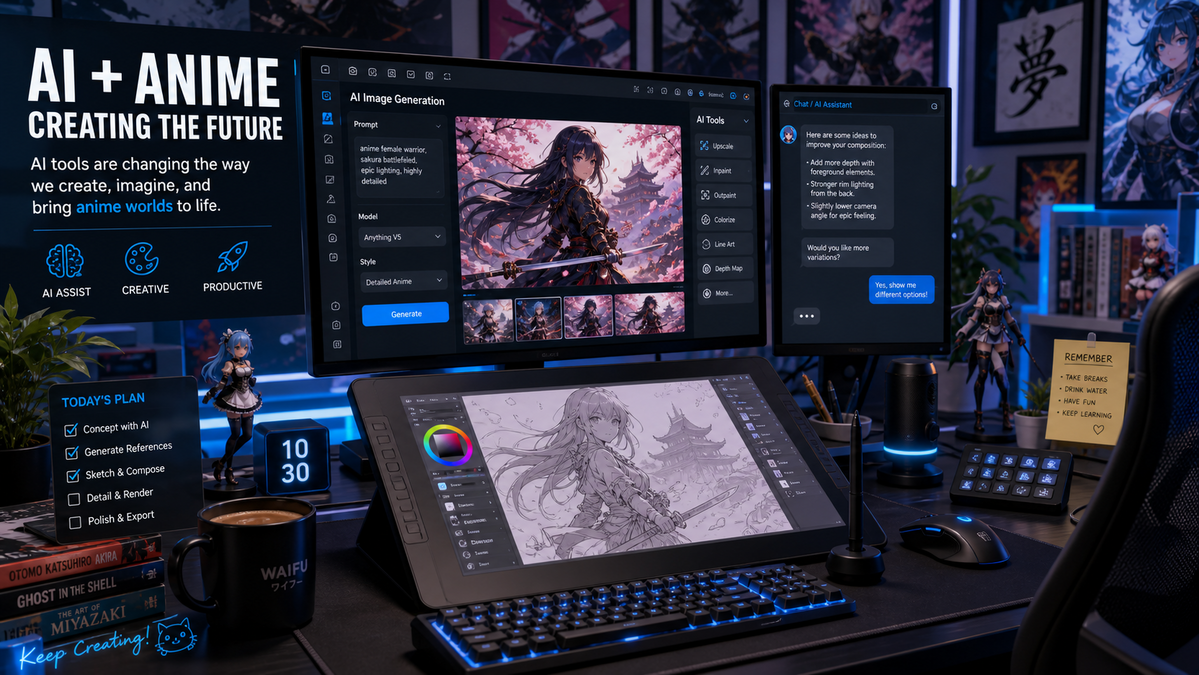
The AI Anime Fan Toolkit
These tools fall into five categories based on what anime fans actually do:
- Fan art creation (drawing, generating)
- Wallpaper discovery and enhancement
- Translation help (subtitles, manga, interviews)
- Cosplay design and planning
- Recommendation discovery (what to watch next)
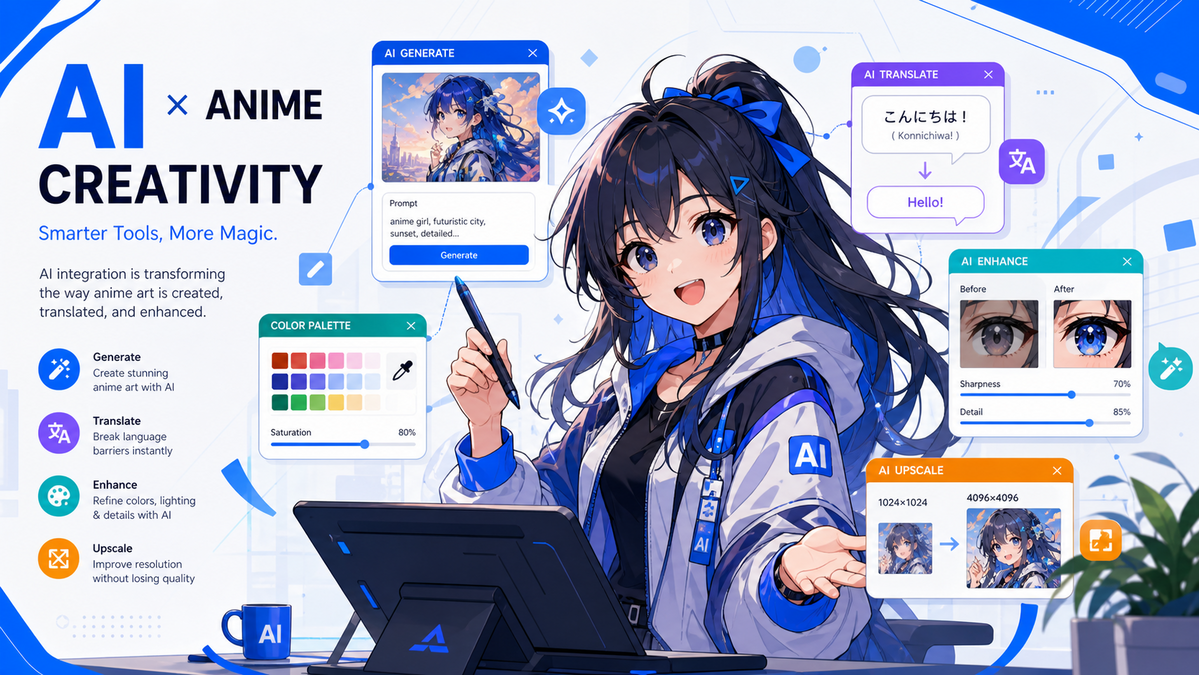
1. AI Image Generators — Fan Art Without the Skills
AI image generators have exploded in 2026. For anime fans, the best options are:
Best for anime style: NovelAI is specifically trained on anime-style art. It produces the most consistently anime-looking results. The interface takes some getting used to, but the quality justifies the learning curve.
Best for photorealistic anime: Midjourney V7 handles anime characters with realistic lighting and backgrounds better than other tools. If you want characters that look like they walked out of a live-action adaptation, Midjourney delivers.
Best free option: Tensor.art runs anime checkpoints on free credits. Quality varies but you can iterate without paying. Good for experimentation before committing to paid tools.
What I use it for: Generating character variations, exploring “what if” scenarios (what would character X look like in steampunk style?), creating custom wallpapers from existing characters.
Honest caveat: AI-generated anime art has ethical issues with artist training data. Many anime artists are against their work being used to train these models. I use these for personal enjoyment, not commercial use, and I still support original artists when I can.
2. Wallpaper Discovery — Never Run Out of Phone Backgrounds
Finding good anime wallpapers used to mean scrolling through dozens of low-quality sites with popup ads. AI changed this.
My current workflow:
- Search Pinterest for “anime character name wallpaper 4K”
- Pick the best 10-15 results
- Use imgupscaler.com (free, AI upscaling) to push them to phone resolution
- Set as wallpaper
This gives me wallpapers that look better than the originals in 10 minutes. The AI upscaler doesn’t add fake details — it intelligently enhances resolution while preserving the art.
Bonus tool: Wallpaper Engine (paid, Steam) lets you set up animated anime wallpapers. Community-created content is extensive and the performance impact is minimal.
3. Translation Tools — When Subtitles Aren’t Enough
Official subs are usually good, but sometimes you want more context. Especially when reading interviews with creators, raw manga panels, or light novel excerpts.
DeepL is the best AI translator for Japanese. It handles anime-style dialogue (including colloquial speech, sentence fragments, emotional outbursts) better than Google Translate. The free tier is generous enough for casual use.
Use cases:
- Translating raw manga panels when scanlations are slow
- Understanding interviews or behind-the-scenes content
- Reading light novel excerpts
- Translating creator Twitter posts
Honest caveat: Don’t replace official translations. AI translation is for personal understanding, not redistribution. If you love a show, support the official release.
4. Cosplay Design Help — AI as a Costume Consultant
Cosplay is expensive. Materials, wigs, accessories — costs add up fast. AI can help you plan and avoid mistakes before committing budget.
Use AI image generators to:
- Visualize costume variations before buying materials
- Test color combinations
- Generate reference images for complex patterns
- See how a costume looks on different body types
Use ChatGPT or Claude for:
- Material recommendations for specific character outfits
- Wig styling tips (heat resistance, dye techniques)
- Makeup tutorials adapted to specific characters
- Budget breakdowns for full costume builds
Honest caveat: AI can’t replace skilled cosplayers for execution. It can help with planning but the actual crafting skill is still human. I’ve seen cosplayers use AI for reference images and material lists, then execute with traditional craftsmanship.
5. Recommendation Discovery — Find Your Next Favorite Show
The hardest part of being an anime fan is finding what to watch next. AI helps here, but you need to use it well.
My recommended approach:
- Pick 3-5 anime you love
- Use ChatGPT or Claude with this prompt: “Based on these 5 anime I loved, recommend 10 anime I haven’t seen yet, with brief explanations of why each matches my taste”
- Cross-reference with AniList or MAL for actual availability
- Check Reddit r/anime for current discussions of those shows
- Watch the first episode of the top 3 recommendations
This combo gives better recommendations than any algorithm alone. AI is good at pattern matching your taste, but humans are better at contextualizing recommendations with current community discussion.
Honorable Mentions
These didn’t make my top 5 but worth knowing:
- Spotify’s AI DJ — Surprisingly good anime OST recommendations and anime-themed radio stations
- OtakuVoice AI — Anime-focused TTS for content creators making videos about anime
- AniSeg — AI-powered anime scene segmentation for clipping specific moments
- Trace.moe — AI that identifies what anime a screenshot is from (reverse image search for anime)
Related Posts You Might Like
- Best Anime Streaming Services 2026 — Where to watch all this content
- I Watched 500+ Hours of Anime in 2026 — The shows worth using these tools on
What AI Can’t Do For Anime Fans
Despite all these tools, AI can’t replace:
- The community aspect of anime fandom (Discord servers, conventions, AMV contests)
- The artistic intent of original creators (their vision matters)
- The cultural context Japanese creators embed in their work
- The joy of discovering something new through human recommendations
- The emotional connection of watching something with friends
AI is a tool. Anime fandom is a community. Use AI to enhance, not replace.
My Daily Workflow With These Tools
Morning routine (5 minutes): Check my AniList RSS feed for new releases. Use ChatGPT to summarize what’s new and what might interest me based on my watch history.
Research time (as needed): When I see a show mentioned on Reddit, I’ll use Perplexity for quick fact-checks before committing to watch it. Saves me from finishing mediocre shows I wasn’t sure about.
After watching (10 minutes): Use AI to help me write down my quick thoughts. I dictate key moments, AI organizes them, I edit for voice. Then I post to my notes or social.
Weekly content creation (2-3 hours): When I’m writing about anime for this blog, I use AI for outlines and research, but my actual analysis and opinions are entirely mine. AI helps with structure, I provide voice and perspective.
AI hasn’t replaced my relationship with anime. It’s just given me better tools for engaging with it. Like how digital cameras didn’t replace photographers — they just changed what photography could be.
Tools I Tried But Don’t Recommend
Some AI tools didn’t make my list because they weren’t useful enough:
- OtakuTalk AI chatbot: Generic chatbot with anime theme — actual model performance was poor
- AnimeAIStoryGenerator: Output was obviously AI-written, no real value
- DeepAnimeArt: Behind a paywall but quality wasn’t competitive with NovelAI
Not every anime-themed AI tool is worth using. Many are cash grabs on the anime audience without real technology behind them.
Ethical Considerations
Using AI for anime-related content raises some questions:
- AI-generated “fan art”: Many anime artists are vocally against their work being used as training data. Generated fan art doesn’t credit or compensate them.
- AI translations: Could undermine professional translators who depend on this work for income.
- AI-generated content about anime: Floods platforms with low-effort content, making it harder for genuine creators to be seen.
My approach: I use AI for personal utility (finding shows, translating for my own understanding) but I don’t generate fan art to post publicly, and I don’t create AI-generated anime content to publish. There’s a difference between using AI to consume and using AI to produce.
Frequently Asked Questions
Is using AI to generate anime art legal?
For personal use, generally yes. For commercial use, it’s a gray area depending on the tool and how outputs are used. Some AI image generators have specific licensing terms that restrict commercial use.
Which AI is best for learning Japanese from anime?
Combine DeepL for translation with Anki for spaced repetition. Add subs2srs for extracting anime subtitles as learning material. This combo has helped many people learn Japanese through anime immersion.
Can AI help me keep up with seasonal anime?
Yes — AniList and MAL have RSS feeds you can pipe into AI summarizers for weekly digests of new episodes. Set up an AI workflow that watches for new releases and creates summary reports.
What’s the best free AI tool for anime fans?
For translation: DeepL free tier. For image: Tensor.art free credits. For wallpapers: imgupscaler.com. They’re all genuinely useful without paying a cent.
Is AI taking over anime production?
Not yet. AI is used in some production pipelines for in-between animation and color correction, but major anime studios still rely heavily on human artists. AI-generated anime content exists but is generally lower quality and hasn’t displaced human-created work.
What AI tools do you use as an anime fan? Drop your favorites in the comments — I’m always looking for new tools to test.